
Drain Unblocking in Sidcup
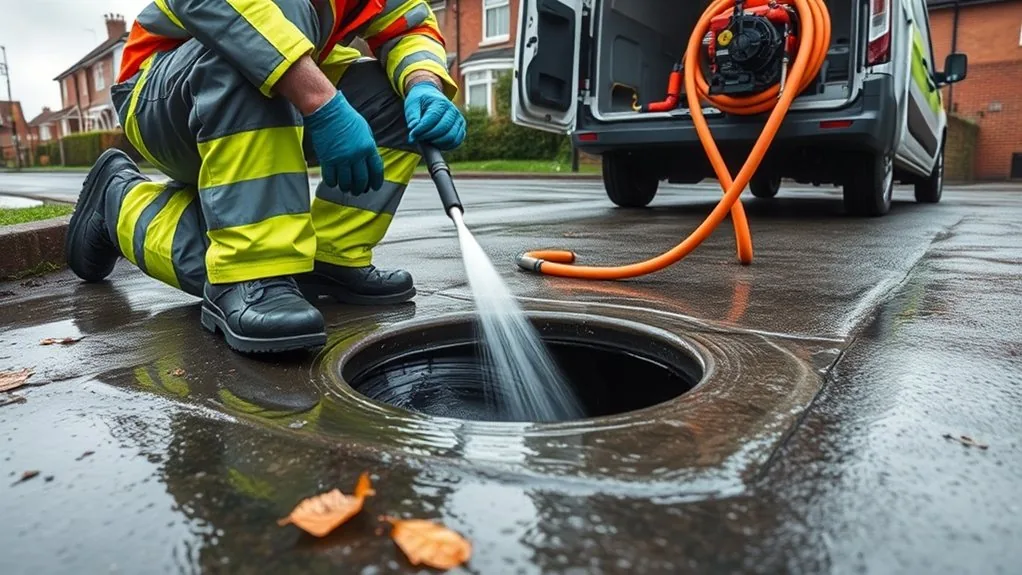
Blocked drains can cause significant disruption and require prompt attention to prevent further issues. Our qualified engineers in Sidcup quickly pinpoint the cause using CCTV surveys.
We clear blockages safely with appropriate methods like high-pressure water jetting or mechanical rodding.
Call now for a fast quote or emergency callout.
When a pipe or drain’s normal flow is impeded by debris, fat, scale, or structural defects, drain unblocking is the targeted process of diagnosing and removing that obstruction to restore full hydraulic capacity. You’re not just “clearing a blockage”; you’re restoring the engineered performance of your drainage system.
A professional technician will typically begin with pipe inspection, using CCTV cameras or other diagnostic tools to locate the restriction and assess the pipe’s condition. Based on what’s found, they’ll apply appropriate methods such as high‑pressure water jetting, mechanical rodding, or root cutting.
Drain unblocking also supports long-term drain maintenance, because identifying defects early lets you plan repairs, reduce emergency callouts, and extend the service life of your underground pipework.
When you notice slow draining sinks, frequent toilet backups, unpleasant drain odours, or gurgling noises from pipes, your system’s flow is already being restricted by partial blockages. These symptoms indicate issues such as accumulated debris, scale build-up, or trapped air, all of which can be diagnosed and resolved with professional drain unblocking. By acting at this stage, you’ll protect your pipework, minimise disruption, and restore your drainage to peak performance.
Ever noticed your sink taking longer and longer to empty, with water hovering stubbornly above the plughole? That delayed drainage is an early technical indicator of developing blockages within the pipework serving your kitchen fixtures or bathroom fixtures. Grease, soap scum, hair, food particles, and mineral scale gradually narrow the internal pipe diameter, increasing friction and reducing flow rate.
You might also hear gurgling, see water “glug” away in stages, or notice residual debris reappearing after the water drains. Don’t ignore these symptoms; they usually mean a partial obstruction that’ll worsen under normal household use. Professional drain engineers can carry out mechanical rodding, high‑pressure water jetting, or trap and waste-pipe cleaning, restoring full flow quickly and preventing more disruptive, costly blockages.
How often does your toilet need plunging before it finally flushes cleanly? Frequent toilet backups are more than an annoyance; they’re a clear indicator that your waste line is partially obstructed and losing capacity. Even if the water eventually goes down, repeated blockages suggest the problem lies beyond the toilet itself, often in the soil stack or underground pipework.
| Symptom | Likely Cause | Recommended Action |
|---|---|---|
| Frequent plunging | Partial blockage in waste line | CCTV survey, mechanical clearance |
| Gurgling on flushing | Vent/stack restriction | Inspect stack, clear obstructions |
| Rising water level | Downstream obstruction | Jetting, root or scale removal |
| Multiple fixtures slow | Main drain constriction | Full-system plumbing maintenance |
Prompt attention prevents sewage overflow and costly structural damage.
Suddenly noticing a sour, sewage-like smell around your sinks, baths, or outside drains is a strong sign that waste isn’t moving cleanly through the system and gases are escaping where they shouldn’t. Persistent odours usually indicate organic build‑up in pipework, blocked vents, or standing wastewater in traps.
You’ll often smell it first around indoor plumbing fixtures, manholes, or soakaways, especially after using taps, showers, or appliances. Outside, poor garden maintenance can worsen the issue if leaves, soil, or roots restrict drainage runs and inspection points.
Professional drain technicians in Sidcup can locate the exact source using CCTV surveys, check trap integrity, and carry out mechanical or high‑pressure water jet cleaning. Addressing odours early prevents corrosion, hygiene risks, and more disruptive blockages later.
When your sinks, toilets, or outdoor drains start making a hollow, gurgling sound as water runs away, it’s usually a pressure imbalance in the pipework caused by a partial blockage or inadequate venting. That gurgling pipes symptom isn’t harmless background drain noise; it’s air being forced through trapped water because wastewater can’t flow freely.
You’ll often notice gurgles after flushing, when a washing machine discharges, or as bathwater drains. Left unresolved, pressure fluctuations can start to pull water from traps, risking odours and even backflow.
A professional drain engineer in Sidcup will typically run CCTV drain surveys, check vent stacks, and clear deposits using high-pressure water jetting. Prompt intervention restores quiet operation, protects your pipework, and helps prevent sudden, messy blockages.
Although every property is different, most blocked drains in Sidcup can be traced to a predictable set of causes: accumulated fats, oils and grease (FOG) congealing in pipes, wipes and sanitary products that don’t break down, scale and silt build‑up in older clay or cast-iron lines, intrusive tree roots seeking moisture, and structural defects such as pipe collapses or misaligned joints. You’ll often see slow-draining fixtures, gurgling, or recurring odours when these issues develop.
Typical triggers include:
When you call us to unblock drains in Sidcup, we start with accurate diagnosis, often using CCTV inspection to pinpoint the exact location and nature of the obstruction. From there, we select the most effective method—high-pressure water jetting, rodding, or mechanical clearance—to restore full flow quickly and safely. If we identify structural issues, we’ll explain whether a targeted repair or trenchless relining solution is the most appropriate long-term fix.
Because effective drain unblocking in Sidcup starts with accurate information, our first step is a thorough diagnosis supported by CCTV inspection. We begin with a structured pipe inspection, checking access points, gradients, and manholes to understand how your system’s laid out and where problems are likely to occur.
Next, we carry out a detailed CCTV diagnosis using high‑resolution camera equipment. This lets us see inside your drains in real time, identifying blockages, root ingress, fat build‑up, displaced joints, cracks, or collapsed sections. We record and review the footage, measure distances precisely, and map the fault’s exact location.
You’ll receive clear findings and practical recommendations, so you know what’s wrong, where it is, and the most effective way to resolve it.
Once we’ve pinpointed the problem area, we typically resolve most blockages using high‑pressure water jetting, which clears the line without relying on harsh chemicals. We feed a flexible hose into your drain pipe, then apply controlled high pressure to strip away grease, scale, and intrusive debris without damaging the pipe’s structure.
Our jetting techniques use calibrated nozzles that direct water both forwards and backwards, scouring the internal walls and flushing waste to a safe discharge point. You’ll get a thorough cleanse, not just a temporary gap in the blockage.
| Problem Feeling | Risk if Ignored | Result After Jetting |
|---|---|---|
| Stress | Overflow and damage | Calm, controlled system |
| Uncertainty | Hidden pipe failure | Clear diagnostic outcome |
| Frustration | Repeat blockages | Long‑lasting flow |
| Disruption | Hygiene concerns | Clean, sanitised lines |
| Doubt | Rising repair costs | Confidence in prevention |
High‑pressure jetting isn’t always the only answer, so we also use rodding and mechanical clearance to deal with stubborn or localised obstructions in Sidcup’s drains. When fat, silt, or debris has hardened, rigid rodding lets us physically break up the blockage and restore flow with minimal disruption to your property.
We’ll often begin with a targeted pipe inspection using CCTV to pinpoint the obstruction’s exact location, depth, and nature. That way, rodding or mechanical cutting heads can be applied precisely, reducing unnecessary stress on your pipework. Mechanical clearance is especially effective on compacted scale, wipes, and tree-root ingress that Hydro jetting alone may not dislodge. Throughout, we monitor progress in real time, ensuring your line is fully cleared before we leave.
When physical clearance isn’t enough to restore the structural integrity of your drain, we move from simple unblocking to targeted repair or relining, ensuring you’re not left with a weak pipe that’s likely to fail again. Using CCTV diagnostics, we identify fractures, displaced joints, root ingress, or collapsed sections that demand more than rodding.
If the defect is localised and time‑critical, we’ll carry out emergency repairs, excising damaged pipework and reinstating it to current standards. Where the drain’s generally sound but compromised, we’ll specify trenchless relining solutions. These install a resin-impregnated liner that bonds to the host pipe, creating a seamless, corrosion‑resistant new pipe within the old one. You get restored hydraulic performance, extended service life, and minimal surface disruption.
Although drainage emergencies are unpredictable, our engineers are strategically based across Sidcup to reach you fast with fully equipped vans, advanced CCTV survey kits, and powerful jetting systems ready to deploy. You benefit from genuine Emergency preparedness: GPS‑routed dispatch, 24/7 call handling, and predefined response procedures for homes, commercial premises, and critical infrastructure.
As soon as you call, your issue’s triaged, risk‑rated, and assigned to the nearest specialist team. On arrival, we complete a structured assessment to locate the blockage, evaluate structural risk, and select the safest clearance method. We always consider Environmental impact, choosing techniques that minimise water use, avoid unnecessary chemicals, and prevent contamination of local watercourses, while restoring full drain function as quickly as possible.
Because responsibility for blocked drains in Sidcup depends on where the fault sits in the network, it’s essential to distinguish between private pipework and shared or public sewers before taking action. If the blockage lies within the boundary of your property and serves only your home, you’re usually responsible for unblocking and ongoing drain maintenance.
Where pipes are shared with neighbours, or once wastewater enters the lateral drain beyond your boundary, responsibility typically transfers to the local water and sewerage company. A targeted pipe inspection using CCTV lets you confirm the exact location of the defect, identify structural issues, and determine who must legally address it.
If you’re unsure, we’ll interpret survey results, explain liabilities, and coordinate the correct remedy.
Instead of waiting for another emergency blockage, you can profoundly reduce drain failures in Sidcup by combining simple routine habits with targeted preventative maintenance. Effective drain maintenance starts with what you discharge: avoid fats, oils, wipes, and sanitary products that solidify or snag. Use sink strainers and regularly flush lines with hot water to disperse minor build-ups.
Schedule periodic CCTV pipe inspections to identify root ingress, scale, or structural defects before they obstruct flow. This data-led approach lets you act early with cleaning, lining, or localised repairs.
When a drain in Sidcup blocks, you need a team that diagnoses accurately, fixes decisively, and prevents recurrence—not just a quick clearance. You get technicians who use CCTV surveys, flow-rate assessments, and pipe condition reporting to identify the exact fault, not guess at it.
We apply targeted methods—high-pressure water jetting, mechanical cutting, or root removal—selected to protect pipe integrity and minimise environmental impact. Our engineers are fully trained in current drainage regulations, confined-space entry, and safe waste disposal.
You’re kept informed with clear findings, photos, and practical recommendations. Customer testimonials highlight our punctuality, clean work practices, and long-lasting results across homes, businesses, and managed properties. You’re choosing a specialist team focused on reliability, transparency, and prevention.
You’ll naturally want clear answers on response times, costs, what you can safely attempt yourself, and whether we cover your part of Sidcup. In this section, we’ll address these key questions with straightforward, technical guidance so you know exactly what to expect. Our aim is to give you enough detail to make confident, informed decisions before any drain unblocking work begins.
How fast can a drain in Sidcup be unblocked depends on factors like blockage severity, drain accessibility, and time of call-out, but in most routine cases we can attend the same day and often within a few hours. You’ll typically get a confirmed arrival window immediately, so you know exactly when help’s coming.
We prioritise emergencies such as overflowing toilets or backed‑up sewers. Our engineers use CCTV for rapid sewer inspection, then select the most efficient method: high-pressure jetting, mechanical rodding, or root cutting. Good drain maintenance helps prevent repeat issues and keeps response times predictable.
| Situation | Typical Response Time |
|---|---|
| Standard residential call | Same day |
| Emergency overflow | Within a few hours |
| Planned drain maintenance | Pre-booked time slot |
Several key factors determine the cost of drain unblocking in Sidcup, including the type of blockage, drain length and layout, access constraints, and the equipment required (such as high‑pressure jetting or CCTV surveys). These pricing factors affect how long the job takes, the level of operator skill needed, and whether specialist machinery is deployed.
You’ll usually receive a clear cost estimate once an engineer’s assessed the site. Simple sink or gully blockages can often be resolved on a fixed-price basis, while more complex underground issues may be priced hourly, with additional charges for surveys or excavation if needed.
Reputable contractors will explain all costs upfront, obtain your approval before proceeding, and provide a detailed breakdown so you understand exactly what you’re paying for.
Although many drain issues in Sidcup can be eased with simple DIY steps, it’s essential to distinguish between safe first checks and problems that need a professional. You can start with basic DIY tips: remove and clean accessible plugholes and strainers, use a plunger with a good water seal, and flush with hot (not boiling) water to disperse grease. Mild, drain-safe cleaning agents can help with soap and fat build-up.
Always follow strict safety precautions. Never mix chemical cleaners, never insert hands or tools into powered equipment, and avoid forcing rods into pipes, which can cause structural damage. If there’s sewage backing up, repeated blockages, gurgling from multiple fixtures, or foul smells outdoors, stop work and call a qualified drainage engineer.
Wondering if your property’s actually within our Sidcup coverage? In most cases, yes. We operate across the county, including major towns, rural villages, industrial estates, and new-build developments. You’ll get rapid dispatch based on your postcode, traffic conditions, and the severity of the blockage.
We don’t just turn up and jet-wash blindly. Our engineers assess pipe layout, depth, and access, then select methods that comply with local regulations and minimise environmental impact. That includes controlled jetting pressures, chemical-free approaches where possible, and proper disposal of any waste removed from your drains.
If you’re near a county border or in a remote location, we’ll confirm availability, response time, and any specific constraints before you commit to a booking.
Yes, we offer discreet drain unblocking services for commercial premises in Sidcup. Our team uses unmarked or low-profile vehicles and wears neutral workwear to minimise visibility. We arrange visits during off-peak hours when necessary and provide clear technical reports to ensure minimal disruption and maintain compliance.
Yes, you can receive full Drain inspection CCTV footage for insurance or legal disputes. We provide high-resolution video, still images, and a written condition report with details of defects, locations, and pipe materials. All recordings are time-stamped and date-stamped, stored securely, and supplied in standard digital formats; we can also communicate with your insurer, loss adjuster, or solicitor if required.
Yes, our drain technicians are trained to work safely around pets and children. Their training includes risk assessment, securing tools and cables, and communicating with you to manage access. They follow pet safety protocols such as keeping doors and gates closed, avoiding chemical exposure, and using barriers when necessary.
Yes, we offer ongoing maintenance contracts specifically for landlords and letting agents in Sidcup. These contracts include scheduled drain cleaning, priority callouts, asset condition reporting, and compliance documentation. Our engineers use CCTV surveys and performance metrics to monitor pipe health and ensure properties are maintained effectively throughout the year.
Yes, we coordinate with other trades on larger renovation or building projects. We manage collaboration and scheduling with builders, plumbers, electricians, and groundworkers from planning to commissioning. This includes providing clear communication, method statements, and ensuring compliance with site protocols to integrate drainage elements smoothly into the construction programme.
When a drain backs up, you need it cleared fast, safely, and for good—not just temporarily relieved. You don’t want guesswork; you want a structured response that restores full flow and protects your property. That’s where same‑day, technically driven drain unblocking in Sidcup comes in.
Your call triggers rapid fault diagnosis using CCTV inspection, flow testing, and, where needed, sonar tracing. Engineers select the correct method—high‑pressure water jetting, mechanical rodding, or root cutting—based on pipe material, diameter, and blockage composition.
You’ll also benefit from emergency preparedness advice and targeted plumbing maintenance plans, helping you minimise future blockages, surcharge, and foul odours. Detailed post‑job reporting gives you transparency on findings, remedial works, and any recommended upgrades to your drainage system.