
Tree Root Damage in Sidcup
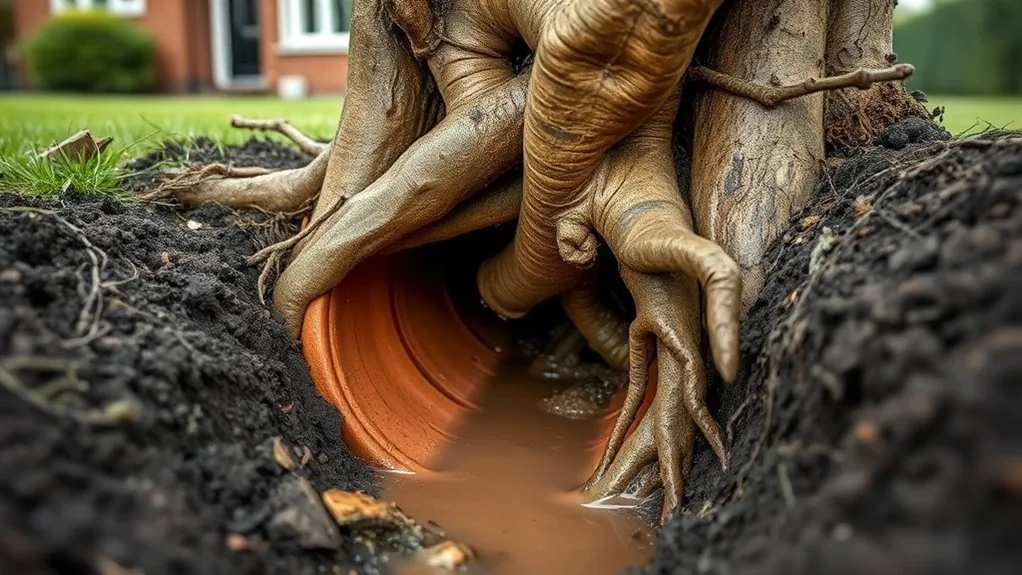
If you’re experiencing slow drains, gurgling toilets, or soggy garden patches, tree roots may be damaging your pipes.
In Sidcup, we use CCTV surveys and specialised techniques to detect and remove root blockages, then repair and protect your drains.
Call now for a fast quote or emergency callout.
When tree roots infiltrate underground pipes and compromise flow, tree root drain damage removal refers to the targeted methods used to locate, clear, and prevent root intrusion in drainage systems. You’re dealing with a physical obstruction caused by root invasion seeking moisture through cracks, joints, or failed seals.
Specialists typically begin with CCTV drain surveys to map the root mass and structural condition. They’ll then apply mechanical cutting or high‑pressure water jetting to excise roots without unnecessarily disturbing surrounding soil or tree health. Where pipes are cracked or misaligned, they’ll often install patch repairs or full-length liners to seal ingress points. Finally, they may recommend root barriers, pipe upgrades, or species selection guidance to reduce future intrusion.
When you’ve got slow draining sinks and toilets, frequent blockages or backups, or gurgling sounds in your pipes, you’re seeing early technical indicators that tree roots may be obstructing your drains. These symptoms often accompany external warning signs like unusual wet patches or lush strips of grass above buried pipe runs. Recognizing this pattern promptly lets you move from guesswork to targeted tree root drain damage removal before minor issues escalate into structural failures.
Although many plumbing issues can cause fixtures to back up, persistently slow draining sinks and toilets are a classic warning sign that tree roots may be intruding into your drains. When wastewater lingers in bowls or basins despite using plungers or mild cleaners, it often indicates partial obstruction within the underground pipework, not a local trap issue.
You’ll typically notice a gradual decline in drainage speed, affecting multiple fixtures on the same line. At this stage, professional CCTV drain surveys are essential to confirm root ingress, assess pipe condition, and protect overall tree health. Targeted mechanical cutting, high‑pressure jetting, and, where appropriate, careful root pruning around the drain run can restore flow, prevent structural pipe failure, and reduce the risk of more severe disruption.
Even if a single clog isn’t unusual, frequent blockages or sudden sewage backups across multiple fixtures often point to tree roots invading and obstructing your drain lines. When toilets, showers, and ground-floor drains all back up together, it usually indicates a restriction in the main sewer rather than isolated pipe issues.
As roots infiltrate tiny cracks or joints, they expand with ongoing root growth, forming dense root masses that trap toilet paper, fats, and other debris. You might clear the line temporarily, but the obstruction returns because the underlying root structure remains. Prompt, professional investigation protects both your system and tree health, using CCTV drain surveys and targeted root removal methods that clear the pipe, limit structural damage, and reduce future blockages.
If your drains and toilets emit persistent gurgling or “glugging” noises, especially after you flush or empty a sink, it often signals restricted flow in the main sewer line from invasive tree roots. Those sounds are air pockets fighting through partial blockages caused by root invasion, displaced joints, or deformed pipes.
You shouldn’t ignore this. Left unresolved, pressure fluctuations can lead to full collapse or sewage backup into your property. A professional CCTV pipe inspection quickly determines whether gurgling is due to tree roots, fat deposits, or structural failure, so the right remediation can be planned.
| Symptom Location | Typical Cause | Recommended Action |
|---|---|---|
| Toilet | Roots in lateral line | CCTV pipe inspection |
| Bath/Shower | Shared stack restriction | Jetting & root cutting |
| Kitchen sink | Downstream root mat | Mechanical descaling |
| Multiple fixtures | Main sewer obstruction | Root removal programme |
| Occasional only | Early-stage root entry | Preventative inspection |
Gurgling indoors is one warning sign; unexplained soggy or consistently damp areas in your lawn, driveway, or garden beds are another strong indicator that tree roots have breached and damaged underground drains. These unusual wet patches often sit directly above outside drainage runs, inspection chambers, or joints where roots typically invade.
You’ll notice the ground staying wet long after rain, with spongy turf, subsidence, or fine cracks in hard surfaces. Left unchecked, leaking effluent can undermine foundations and create hygiene risks.
A Sidcup drainage specialist will usually trace pipe routes, then use CCTV drain surveys and dye testing to confirm root intrusion and pinpoint the leak. From there, they can mechanically cut roots, clear the line, and install localised structural liners to seal and protect the drain.
Although it might seem like roots invade drains at random, tree root damage typically stems from a few predictable conditions: aging or poorly installed pipes, tiny structural defects, and moisture leakage. Cracked joints, displaced sections, or poor seals release vapour and nutrients that actively attract Root growth. From a Tree health perspective, the roots are simply following water and oxygen.
You’re most at risk where:
When you’ve got tree roots breaching your drains in Sidcup, the first step is precise diagnosis using CCTV inspection to map the extent and exact location of the intrusion. Depending on the severity, we’ll use targeted high-pressure jetting or rodding and mechanical clearance to cut and flush out the roots without damaging sound pipework. If the pipe is cracked or structurally weakened, we’ll specify localised repair or full relining to restore hydraulic performance and prevent repeat ingress.
Because tree roots often spread far beyond what you can see on the surface, accurate diagnosis starts with a detailed CCTV drain inspection to pinpoint the exact location, extent, and nature of the intrusion. You’ll see live footage from inside the pipe, letting us distinguish between fine root ingress, collapsed sections, and joint failures.
We’ll also assess soil stability and identify nearby tree species, since different root structures affect how aggressively roots penetrate joints and defects. During the inspection, we log distances, pipe material, diameter, and flow conditions, then mark precise points where roots enter. This data allows us to separate isolated root ingress from systemic structural damage, so we can recommend targeted, minimally invasive remedial work rather than disruptive, unnecessary excavation.
So how do you actually clear those roots once they’ve been identified on CCTV? In most Sidcup properties, the first-line solution is high-pressure water jetting. Using a specialised jetter, we introduce a hose into the drain and deliver water at carefully controlled pressures and flow rates. This cuts through fine to moderate root growth, strips away fibrous masses, and restores the original pipe bore.
We select nozzles and pressures to protect pipe integrity while maximising cutting efficiency. The process also scours accumulated silt, grease, and debris that trap roots and accelerate blockages. Because jetting targets roots within the pipe and not the surrounding soil, it doesn’t directly compromise tree health, but it does reduce incentives for further invasive root growth into your drainage system.
Sometimes roots are too woody or entrenched for jetting alone, and that’s where rodding and mechanical clearance come in for Sidcup properties. When your drains are obstructed by dense, fibrous or woody root masses, we’ll deploy heavy-duty drain rods and mechanical cutters sized to your pipe diameter. These rotating blades physically plane back intrusive roots, restoring bore and flow without unnecessary excavation.
We’ll work from existing access points where possible, carefully mapping root density and direction so we don’t damage structurally sound pipe runs. After clearance, we’ll advise on managing nearby vegetation, including targeted tree pruning and installing root barriers to discourage re‑growth toward the drainage line. This combined approach keeps your system operational and reduces the risk of repeat blockages.
When root ingress in your Sidcup drains has progressed from nuisance blockage to structural damage, clearance alone won’t be enough; that’s when we move to targeted repair or trenchless relining. Using CCTV, we confirm fractures, displaced joints, and voids caused by aggressive root growth, interpreting what we see in the context of tree health and roots anatomy.
You’ll typically need repair when there’s collapsed pipework, major joint displacement, or persistent leakage into surrounding soil. We may cut out a short defective section and install new pipework, or, where the structure is mostly sound, install a cured‑in‑place liner. This trenchless method seals cracks, excludes future root ingress, and restores hydraulic capacity, all while minimising excavation, disruption, and long‑term maintenance risk.
Although tree root damage can escalate quickly, our rapid-response teams are strategically based across Sidcup to reach your property fast, assess the severity of root intrusion, and stabilise your drainage system before further deterioration occurs. You get engineers equipped with CCTV survey units, cutting heads, and high-pressure jetting, minimising disruption to garden landscaping and existing tree pruning plans.
| Sidcup Area Type | Typical Response Time | Common Root Issues Visualised |
|---|---|---|
| Urban zones | Within 1–2 hours | Blocked gullies, slow kitchen waste lines |
| Suburban streets | Same-day | Roots through old clay joints |
| Rural villages | Same or next-day | Long root masses in septic feeds |
| Coastal properties | Same-day | Salty soils, cracked PVC entries |
| Commercial sites | Priority booking | Repeated backups in shared drains |
Rapid response is only half the battle – you also need clarity on who should pay for clearing the roots and repairing the damaged pipework. In most cases, you’re responsible for drains within your property boundary up to the connection with the public sewer. The water company usually covers damage in public sewers and some shared laterals.
Responsibility doesn’t depend on who owns the tree; it hinges on where the defective drain lies. If CCTV shows root growth exploiting cracked or poorly-jointed pipes on your land, you’ll normally fund removal and repair. If the defective section is off-site, liability may fall on neighbours or the water authority. A professional survey documents pipe condition, tree health, and root ingress, giving you clear evidence for insurers or third parties.
Instead of waiting for another blockage to expose hidden defects, you can systematically reduce the risk of tree root intrusion through targeted prevention. Start with a CCTV drain survey to map pipe routes relative to nearby trees and identify joints or cracks that invite root ingress. Repair defects with appropriate lining or sectional repairs, as sound pipes are far less attractive to roots.
Use root pruning carefully, following arboricultural guidance, so you protect both your drains and overall tree health. Where roots repeatedly threaten pipes, consider root barriers or relocating new planting away from drain runs.
Preventive steps like CCTV surveys, targeted repairs, and careful root management are most effective when backed by specialists who understand both drainage systems and tree behaviour. You need a team that can interpret survey data accurately, distinguish structural defects from root intrusion, and design the least disruptive solution.
We combine high-resolution CCTV diagnostics with specialist cutting and lining technologies to clear roots and restore pipe integrity quickly. Our methods are chosen to protect tree health while preventing renewed root growth into joints, cracks, and connections. You’ll get clear reporting, evidence-based recommendations, and repairs calibrated to pipe material, diameter, and depth. By integrating arboricultural insight with drainage engineering, we remove existing blockages and considerably reduce the risk of repeat root-related failures.
You’ll naturally want clear answers on how fast we can attend a tree root drain problem in Sidcup, what it’s likely to cost, and whether there’s anything you can safely try yourself first. You may also be unsure if your particular area in Sidcup is covered. Below, we address these key questions so you can make a straightforward, informed decision.
When tree roots are blocking or damaging your drains in Sidcup, rapid response is critical to prevent escalating structural issues, backups, and potential flooding. In most cases, you can expect an initial assessment the same day you call, with CCTV drain surveys and root intrusion confirmation arranged within 24 hours, subject to access conditions.
Once root growth is located, mechanical cutting, high‑pressure jetting, or specialist root removal can usually be scheduled within 24–48 hours. Where drains are severely compromised, lining or localised patch repairs follow immediately after clearance to restore hydraulic capacity.
Throughout, you’ll get advice on managing nearby vegetation to balance Tree health with long‑term drain performance, helping reduce repeat intrusions while preserving valuable trees on your property.
Several key factors drive the cost of Tree Root Drain Damage Removal, so prices typically range from a straightforward clearance fee to more substantial repair costs if the pipe is cracked or collapsed. You’re usually paying for diagnostics, the complexity of access, the severity of Root growth, and whether sections of pipe need lining or replacement.
| Service Level | Typical Scenario | Indicative Cost* |
|---|---|---|
| CCTV survey only | Early investigation, Tree health concerns | £90–£180 |
| Root cutting & clearance | Moderate root ingress, no pipe break | £150–£350 |
| Local patch lining | Small crack with recurring root intrusion | £250–£600 per patch |
| Full length lining | Heavily damaged but structurally viable run | £800–£2,000+ |
| Excavation & replacement | Collapsed or severely displaced pipework | £1,500–£5,000+ |
*Estimates; site-specific surveys refine costs.
Costs can mount quickly, so it’s natural to ask whether you can tackle tree root drain problems yourself before calling in specialists. You can do some basic checks: lift accessible inspection covers, note water levels, and listen for gurgling. Simple DIY tips include gently plunging or using a drain snake on internal pipework to rule out minor blockages.
However, physical root removal is rarely a safe DIY task. Roots usually enter through cracked joints; forcing rods or chemicals can worsen damage, breach pipes, or contaminate soil. Essential safety precautions include avoiding power tools in confined spaces, not entering manholes, and never mixing drain chemicals. In practice, your role is safe investigation and symptom reduction—then getting a professional CCTV survey and targeted root removal.
Wondering if we can actually get to you in Sidcup? We cover most of the county, including urban, suburban, and rural locations. Whether you’re in Maidstone, Canterbury, Ashford, Tunbridge Wells, Medway towns, Thanet, or smaller villages, we’ll confirm coverage quickly from your postcode.
Our engineers use CCTV drain surveys and root-cutting equipment mounted on fully mobile units, so access is rarely an issue. If you’re near county borders, we’ll still assess feasibility and travel time before booking.
We also consider tree health and your long‑term landscaping plans. Where possible, we’ll suggest adjustments to planting distances, species choice, and root barriers, so you’re not just fixing today’s blockage but reducing future drain and root conflicts.
Yes, tree roots can damage newly installed plastic or PVC drainage pipes. Roots may enter through poorly sealed joints or small defects as they seek moisture. Proper installation with solvent-welded or rubber-sealed joints, maintaining clearance from aggressive species, and regular CCTV inspections can help detect and prevent damage.
You usually do not need to remove your trees to stop recurring drain blockages. CCTV drain inspections and targeted root cutting are used to manage root intrusion. Repairs or relining of cracked pipes, tree pruning, and installing root barriers help prevent roots from entering drains again. Ongoing maintenance and periodic inspections are necessary to keep the system clear while preserving mature trees.
Insurers generally view long-term root ingress as gradual deterioration, which is usually excluded from standard insurance claims. In contrast, a sudden drain collapse may be considered an insurable event after a thorough risk assessment. To protect your cover, obtain a CCTV survey, keep records of any damage progression, consider upgrading to root-resistant lining, and ask your insurer in writing how they classify your specific defect.
Yes, there are eco-friendly methods to deter roots without harming the tree. Physical barriers and correct pipe lining can redirect roots away from pipes without causing stress to the tree. Natural repellents such as composted pine, crushed rock, or mulched gravel reduce soil moisture near pipes, discouraging root growth. Low-toxicity root inhibitors in slow-release formulations may also be used by professionals to limit root regrowth inside pipes while maintaining tree health and soil biology.
CCTV drain surveys cannot definitively identify the exact tree causing the damage. However, they can show entry points, root thickness, and growth direction to help support root identification. Combining this information with site surveys and, if necessary, laboratory analysis of root samples can provide a clearer indication of the tree responsible.
Once you’ve confirmed that tree roots are invading your drains, you need a structured plan to remove them and prevent repeat damage. You can’t just jet the line and hope for the best; you need root cutting, a condition survey, and a long‑term strategy to manage Tree maintenance and Root growth near your pipe runs.
First, a CCTV drain survey pinpoints the exact intrusion points and extent of damage. Next, high‑pressure water jetting and mechanical root cutting restore flow. Where pipes are cracked or joints are open, no‑dig patch repairs or full lining seal the system and block re‑entry. Finally, planned root‑zone pruning, species selection, and barrier installation protect both your drainage and nearby trees.